Prison workout routines are bodyweight exercises performed in confined spaces with minimal equipment, focusing on strength, endurance, and mental discipline. Originating in correctional facilities, they emphasize functional fitness and resilience, gaining popularity worldwide for their effectiveness and accessibility. These routines have been adopted by celebrities and fitness enthusiasts, proving their versatility and results-driven approach to building muscle and mental toughness without traditional gym gear.
What is a Prison Workout Routine?
A prison workout routine is a series of bodyweight exercises designed to build strength, endurance, and mental resilience without requiring specialized equipment or large spaces. Originating in correctional facilities, these routines typically include push-ups, pull-ups, squats, and core exercises, performed in high repetitions or circuits. They emphasize functional fitness and adaptability, making them accessible to anyone, regardless of their environment. The focus is on maximizing results with minimal resources, fostering discipline and consistency. These workouts have gained popularity worldwide for their simplicity, effectiveness, and ability to deliver significant muscle growth and mental toughness.
Origins and Popularity of Prison Workouts
Prison workouts originated in correctional facilities where access to equipment and space was severely limited. Inmates relied on bodyweight exercises like push-ups, pull-ups, and squats to maintain physical fitness. The routines gained popularity due to their simplicity and effectiveness, with celebrities like Mike Tyson and Rita Ora adopting them. These workouts became a symbol of resilience and discipline, transitioning from prison yards to mainstream fitness culture. Their popularity stems from their accessibility, requiring no equipment, and their ability to deliver results in confined spaces, making them a practical choice for anyone seeking a challenging, no-frills workout regimen.
Key Benefits of a Prison Workout Routine
Prison workout routines offer numerous benefits, including increased muscle mass, improved endurance, and enhanced mental discipline. These bodyweight exercises are highly effective for building strength without equipment, making them accessible to anyone. The routines also promote mental toughness and resilience, as they require consistent effort and focus. Additionally, they improve flexibility and mobility, essential for overall physical fitness. The high-intensity nature of these workouts aids in weight loss and stress relief, while the lack of equipment makes them ideal for small spaces. Overall, prison workouts provide a comprehensive fitness solution that enhances both physical and mental well-being, making them a popular choice for many.
Core Exercises in a Prison Workout Routine
Core exercises in a prison workout routine include push-ups, pull-ups, squats, and planks, designed to build strength and endurance using minimal equipment, focusing on functional fitness and mental discipline.
Push-Ups and Variations
Push-ups are a cornerstone of prison workouts, targeting the chest, shoulders, and triceps. Standard push-ups are performed with hands shoulder-width apart, engaging the core for stability. Variations like diamond push-ups (hands close together) focus on triceps, while wide-arm push-ups emphasize the chest. Decline push-ups, using a raised surface, increase difficulty. These exercises build upper body strength and endurance without equipment. Prisoners often perform high reps with minimal breaks, enhancing muscular stamina and mental resilience. Push-up variations are versatile, allowing for progression and ensuring continuous muscle engagement, making them a key component of effective bodyweight training in confined spaces.
Pull-Ups and Alternative Exercises
Pull-ups are a fundamental exercise in prison workouts, targeting the back, shoulders, and arms. They require minimal equipment, often using a bar or makeshift structure. For those without access to a bar, alternatives like resistance band rows or towel pull-aparts are effective. These exercises build lat strength and endurance. Variations such as wide-grip or close-grip pull-ups can target different muscle groups. If pull-ups are too challenging, assisted versions or isometric holds (e.g., hanging for time) are great alternatives. Consistency and progressive overload are key to building muscle mass and strength, even with limited resources.
Squats and Lower Body Work
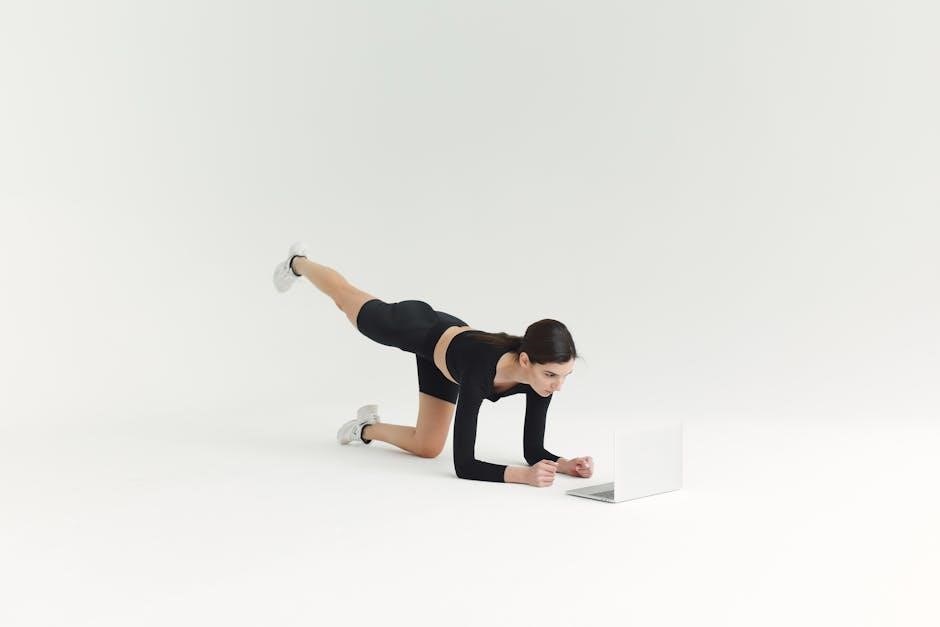
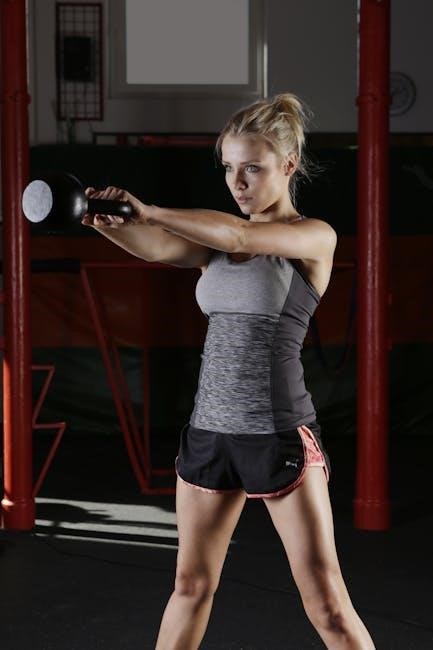
Squats are a cornerstone of prison workouts, targeting the legs, glutes, and core. They are performed with bodyweight or added resistance using available objects. Variations like bodyweight squats, sumo squats, and plyometric squat jumps add intensity. Squat jumps enhance explosiveness, while deep, controlled movements build muscle endurance. These exercises are effective in confined spaces, requiring minimal equipment. Consistency and progressive overload are key to building lower body strength and power. Squats are versatile, allowing for modifications to suit different fitness levels, making them a staple in prison routines for overall lower body development and functional fitness.

Core Strengthening Exercises
Core strengthening exercises are essential in prison workouts, focusing on building abdominal and lower back muscles. Sit-ups, crunches, and planks are common, performed with bodyweight or added resistance. Sit-ups target the abdominals, while planks improve stability and endurance. Superman exercises strengthen the lower back, enhancing posture and overall core stability. These exercises require minimal space and no equipment, making them ideal for confined environments. Consistency and high repetitions are key to developing a strong, resilient core, which is vital for overall physical fitness and functional movement. Core work is often combined with other exercises to maximize efficiency and results.

Structure of a Prison Workout Routine
A typical prison workout starts with a morning routine, including push-ups, sit-ups, and squats. It incorporates warm-ups, circuit training, and progressive overload to build strength and endurance effectively.
Morning Routine: A Typical Day Start
A prison workout morning routine is rigorous, often starting with 100 push-ups, 100 sit-ups, and 100 bodyweight squats, performed with minimal breaks. This high-repetition approach targets the upper body, core, and legs. Some routines also include 15-20 minutes of cardio, such as jumping jacks or running in place, to boost heart rate and burn fat. The focus is on building endurance and mental toughness from the start of the day. This structure reflects the discipline and resourcefulness inherent in prison workouts, emphasizing consistency and full-body engagement to maximize results with limited time and space.
Warm-Up and Mobility Exercises
A prison workout warm-up typically involves dynamic movements to prepare the body for intense exercise. Circuits may include pull-ups, air squats, push-ups, sit-ups, and Superman exercises to activate muscles and improve flexibility. Mobility drills, such as arm circles and leg swings, are also common to enhance joint movement. This warm-up is designed to be equipment-free and space-efficient, lasting around 15-20 minutes. The focus is on raising heart rate and loosening muscles to prevent injury and prepare for the rigorous routines ahead. These exercises set the foundation for a productive and injury-free workout session.
Circuit Training and High-Intensity Work
Prison workouts often incorporate circuit training, involving consecutive exercises with minimal rest. This high-intensity approach maximizes time and space, targeting full-body engagement. Typical circuits include push-ups, pull-ups, squats, and sit-ups, performed in rapid succession. Descending and ascending rep schemes are common, such as 20 to 1 or 1 to 20 reps per exercise. High-intensity interval training (HIIT) is also used, with short bursts of effort followed by brief recovery periods. This method boosts cardiovascular fitness, muscular endurance, and mental toughness. Circuit training is a cornerstone of prison workouts, ensuring efficient and effective results without equipment or ample space.
Progressive Overload and Muscle Gain
Progressive overload is a cornerstone of prison workouts, focusing on increasing intensity over time to build muscle. Without weights, inmates rely on bodyweight exercises, gradually increasing reps, sets, or reducing rest periods. Techniques like descending reps (20 to 1) or ascending reps (1 to 20) challenge muscles differently. High-frequency training, often daily, promotes muscle growth and endurance. Even without equipment, consistent progression leads to significant gains, proving that intensity and dedication can achieve impressive results. This approach highlights the effectiveness of bodyweight training for building strength and muscle mass in confined environments.

Advanced Techniques in Prison Workouts
Advanced techniques include descending/ascending rep schemes, isometric holds, plyometrics, and bodyweight hacks to maximize muscle growth and endurance without equipment, enhancing intensity and results.
Descending and Ascending Rep Schemes
Descending and ascending rep schemes are advanced techniques used in prison workouts to boost intensity and muscle engagement. Descending reps involve starting with a high number of repetitions (e.g., 20) and gradually decreasing to 1, while ascending reps begin with a low number and increase to 20. These schemes challenge the body and mind, promoting endurance, strength, and mental resilience. They are often combined with minimal rest periods to maximize efficiency, making them ideal for confined spaces and no-equipment training. This approach ensures continuous progression and prevents plateaus, keeping workouts dynamic and effective for long-term muscle growth and physical conditioning.
Isometric Holds and Tension Work
Isometric holds and tension work are integral to prison workouts, focusing on sustained muscle contractions without movement. Exercises like planks, wall sits, and glute bridges are commonly used to build endurance and strength. These holds target specific muscle groups, improving stability and core strength. By maintaining tension for extended periods, individuals enhance muscle density and mental focus. Isometric work is particularly effective in confined spaces, requiring no equipment. It complements dynamic movements by increasing muscle time under tension, fostering overall physical resilience and discipline, which are central to the prison workout philosophy.
Plyometric Exercises for Explosiveness
Plyometric exercises, such as squat jumps and box jumps, are explosive movements that enhance power and speed. These dynamic exercises are integral to prison workouts, requiring minimal space and no equipment. By incorporating plyometric drills, individuals can improve muscular explosiveness and cardiovascular endurance. Squat jumps, for instance, involve rapid, powerful movements that engage the legs and core, mimicking real-world physical demands. Such exercises not only boost athleticism but also add variety to routines, keeping workouts engaging and challenging. Plyometrics are a testament to the versatility of bodyweight training, proving that intensity and results are achievable without traditional gym gear.
Bodyweight-only Workout Hacks
Bodyweight-only workout hacks maximize efficiency without equipment, focusing on creativity and intensity. Techniques like grip variations for pull-ups, depth adjustments for squats, and isometric holds enhance muscle engagement. Prisoners often use towel-assisted exercises, such as towel pull-ups or towel-resisted push-ups, to increase difficulty. Elevating feet during push-ups or using a single leg for squats targets specific muscle groups. These hacks allow for progressive overload and muscle gain, even in confined spaces. By modifying exercises to increase tension or range of motion, individuals can achieve impressive results, proving that creativity and consistency are key to bodyweight-only training success.
Mental and Physical Benefits
Prison workouts build mental toughness and discipline while improving muscle mass, endurance, and flexibility. They also enhance stress relief and mental clarity, fostering overall well-being.
Building Mental Toughness and Discipline
Prison workouts foster mental resilience by requiring consistent effort without modern gym amenities. The structured routines, such as morning exercises and high-intensity circuits, demand unwavering dedication. Performing exercises like push-ups, squats, and pull-ups in confined spaces builds discipline and perseverance. The mental challenge of adhering to a strict regimen, even in isolating conditions, strengthens willpower and focus. Overcoming physical and mental fatigue through repetitive, intense workouts cultivates a mindset of resilience and determination. This mental fortitude translates beyond fitness, empowering individuals to tackle life’s challenges with confidence and tenacity.
Improving Muscle Mass and Endurance
Prison workouts are renowned for their ability to build significant muscle mass and endurance without heavy equipment. High training frequency and bodyweight exercises like push-ups, pull-ups, and squats target major muscle groups, promoting hypertrophy and strength. The routines often involve progressive overload, where inmates gradually increase reps or intensity to challenge muscles further. This consistent stress on the body fosters muscle growth and enhances endurance. Even in confined spaces, the focus on compound movements ensures efficient muscle engagement, making prison workouts a testament to the effectiveness of bodyweight training for building lean, functional muscle mass and improving overall physical resilience.
Enhancing Flexibility and Mobility
Prison workouts often incorporate dynamic stretches and mobility exercises to enhance flexibility and range of motion. Inmates frequently perform yoga-like stretches, leg swings, and deep lunges to maintain joint health. These movements are crucial in confined spaces, where limited mobility can lead to stiffness. By focusing on full-body exercises like squats and push-ups, individuals improve flexibility in their hips, shoulders, and hamstrings. Warm-up routines, such as arm circles and torso twists, also play a key role in preventing injuries and maintaining mobility. Over time, these practices enhance overall flexibility, allowing for better movement and posture, even in restrictive environments.
Stress Relief and Mental Clarity
Prison workouts are renowned for their mental benefits, particularly in stress relief and enhancing mental clarity. The repetitive nature of bodyweight exercises like push-ups, squats, and pull-ups fosters a meditative state, helping individuals clear their minds. Endorphins released during intense physical activity naturally reduce stress and anxiety. Inmates often report improved focus and emotional stability after workouts, which serve as a healthy outlet for pent-up energy. The structured routines also build discipline, providing a sense of control and purpose in challenging environments. This mental resilience is a cornerstone of the prison workout philosophy, promoting long-term emotional well-being and clarity of thought.

Workout Variations and Adjustments
Prison workouts offer versatile routines adaptable to any fitness level, using minimal equipment. Variations include descending reps, isometric holds, and plyometric exercises, ensuring continuous progress and engagement.
No-Equipment, Small-Space Workouts
Prison workouts are designed to be performed in confined spaces with no equipment, making them ideal for small areas. Exercises like push-ups, squats, and pull-ups are staples, requiring minimal space. These routines focus on bodyweight exercises that can be adapted to fit any environment, ensuring consistency and progress. Even in solitary confinement, effective workouts are possible by using creative techniques like isometric holds and plyometric movements. The emphasis is on maximizing results with limited resources, proving that fitness is achievable regardless of surroundings. This accessibility has made prison workouts popular among those with restricted space or no access to gym equipment.
Modifications for Beginners
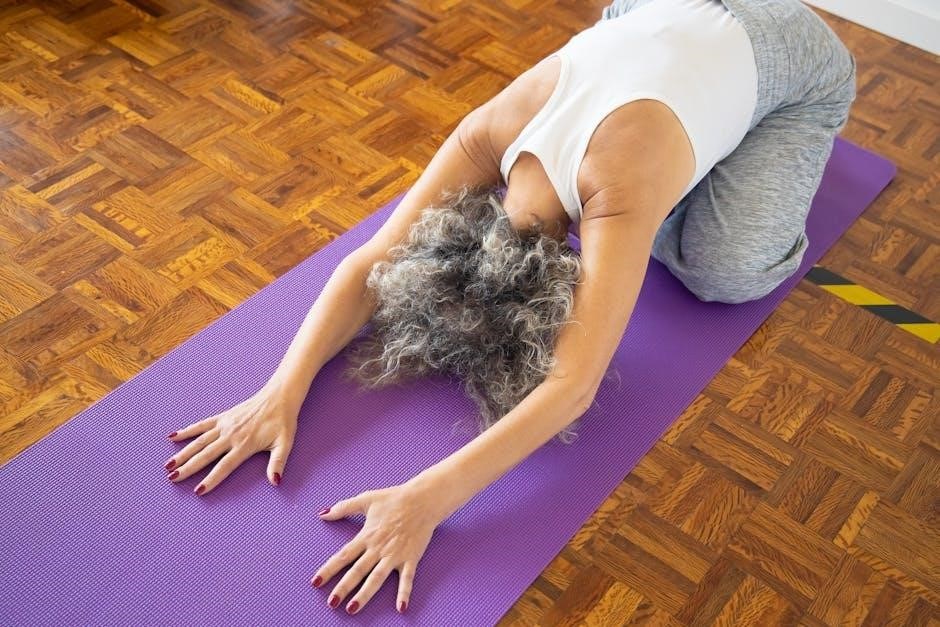
For those new to prison workouts, modifications are essential to build strength and confidence gradually. Start with knee push-ups instead of traditional push-ups and use chair-assisted pull-ups if needed. Squats can be modified by reducing depth or using a chair for support. Break exercises into shorter sets with more breaks to avoid burnout. Focus on proper form to prevent injuries and gradually increase intensity. Incorporate shorter circuits and reduce rep counts initially, then progress as fitness levels improve. These adjustments ensure a safe and effective introduction to the routine, helping beginners establish a strong foundation before advancing to more challenging exercises.
Advanced Routines for Experienced Individuals
Experienced practitioners can push their limits with advanced prison workout techniques. Incorporate descending and ascending rep schemes, such as 20 to 1 and back up to 20, to maximize muscle engagement. Plyometric exercises like squat jumps and clapping push-ups add explosiveness. Isometric holds, such as plank variations, increase time under tension. Advanced circuits involve minimal breaks between exercises, enhancing endurance and mental toughness. For those with access to minimal equipment, weighted vests or homemade resistance tools can intensify workouts. These routines challenge even the fittest individuals, promoting continuous progress and helping to break through plateaus for sustained muscle growth and strength gains.
Incorporating Isolation and Compound Movements
Prison workouts often blend isolation and compound movements to maximize efficiency. Compound exercises like push-ups, pull-ups, and squats engage multiple muscle groups simultaneously, building overall strength. Isolation movements, such as tricep dips or targeted core work, focus on specific muscles for detailed sculpting. Advanced routines combine these, using variations like diamond push-ups for triceps or wide-grip pull-ups for lats. This balanced approach ensures comprehensive development without equipment, making it ideal for confined spaces. By alternating between compound and isolation exercises, individuals can address muscle imbalances and enhance overall physique, achieving a well-rounded fitness level through strategic movement selection and progression.
Tracking Progress and Staying Motivated
Track progress by logging workouts, measuring reps, and monitoring strength gains. Stay motivated by setting realistic goals, celebrating small victories, and maintaining consistency. Accountability and visible results fuel determination, keeping you committed to your prison workout journey.
Setting Realistic Goals and Challenges
Setting realistic goals is crucial for maintaining motivation in a prison workout routine. Start with achievable milestones, such as increasing push-up reps or mastering pull-up variations. Break larger goals into smaller, manageable challenges to track progress effectively. For example, aim to perform 20 consecutive push-ups or complete a set of 10 squats without rest. Celebrate each accomplishment to stay motivated. Incorporate progressive overload by gradually increasing reps or intensity over time. Challenges like descending rep schemes (20 to 1) or plyometric exercises can add variety and push your limits. Align goals with your fitness level to ensure steady improvement and avoid burnout.
Logging Workouts and Measuring Progress
Logging workouts is essential for tracking progress in a prison workout routine. Keep a journal to record exercises, reps, and sets completed each day. Note improvements in form, endurance, and strength over time. Use a mobile app or handwritten log to stay consistent. Measure progress by increasing reps, reducing rest time, or mastering more challenging variations. Regularly review your logs to identify patterns and adjust your routine. Progress photos and measurements can also serve as visual motivation. Tracking helps maintain accountability and ensures steady improvement, even with limited equipment. Celebrate small victories to stay motivated and focused on long-term goals.
Staying Consistent and Avoiding Plateaus
Consistency is key to success in a prison workout routine. Aim to train daily, even if it’s for shorter sessions, to maintain momentum. To avoid plateaus, vary your exercises, increase reps, or reduce rest time. Incorporate advanced techniques like plyometric exercises or isometric holds to challenge yourself further. Track your progress and set small, achievable challenges to stay motivated. Mix up your routine every few weeks to keep your body guessing. Remember, progression is gradual, so stay patient and committed. Consistency and creativity will help you overcome plateaus and continue making gains, even with minimal equipment.
Motivational Tips from Experienced Practitioners
Experienced practitioners emphasize the importance of mental discipline and consistency. Mike Tyson, for instance, credits his prison workout routine for significant weight loss and strength gains. Start with a strong morning routine, such as 100 press-ups or squats, to build discipline. Set realistic goals and track progress to stay motivated. Incorporate variety by alternating between upper-body and lower-body focus days. Stay consistent, even with small workouts, to avoid plateaus. Mental clarity and resilience are key—remember, every rep builds strength and character. Logging workouts and celebrating small victories can keep you driven and focused on your fitness journey.
Prison workout routines offer an effective, accessible path to strength and resilience. Their focus on mental discipline and physical endurance makes them a timeless fitness solution. Start your journey today and unlock your full potential with these proven, no-equipment exercises.
Summarizing the Prison Workout Philosophy
The prison workout philosophy centers on resilience, self-reliance, and mental fortitude. It emphasizes bodyweight exercises to build strength, endurance, and discipline without equipment. Originating in confined environments, it fosters creativity and resourcefulness, proving that physical transformation is possible under any condition. The philosophy prioritizes functional fitness, mental clarity, and stress relief, making it accessible to everyone. By focusing on consistency and progressive overload, it encourages individuals to push their limits and embrace challenges. This approach has evolved into a global fitness movement, inspiring people to adopt a no-excuses mindset and achieve their goals with determination and hard work.
Encouragement to Start Your Journey
Embarking on a prison workout journey is a powerful step toward transforming your body and mind. These routines are designed for anyone, regardless of fitness level, proving that minimal equipment can yield maximum results. By committing to consistency and discipline, you’ll build strength, endurance, and mental resilience. Start with simple exercises like push-ups, squats, and core work, gradually increasing intensity. Remember, the prison workout philosophy is about overcoming limitations and embracing challenges. Download a prison workout routine PDF to guide you, stay motivated, and witness the profound changes in your physique and mindset. Your journey to a stronger, healthier you begins now.
Additional Resources for Further Learning
For those eager to dive deeper, numerous resources are available to enhance your understanding of prison workout routines. Downloadable PDF guides, fitness websites, and YouTube channels offer detailed workout plans and tutorials. Explore expert interviews and forums where practitioners share their experiences and tips. Many fitness enthusiasts and trainers provide free eBooks and step-by-step instructions tailored to different fitness levels. These resources are invaluable for refining your technique, staying motivated, and exploring variations of the routine. Utilize these tools to maximize your results and continue your fitness journey with confidence and knowledge.